

Nintendo’s handheld gaming monopoly faces its biggest threat yet. The Steam Deck’s explosive growth has proven that PC gaming on-the-go isn’t just viable—it’s revolutionary. Valve shipped over 3 million units in 2023 alone, while Nintendo Switch sales have plateaued at 129 million consoles since 2017.
But leaked specifications suggest Nintendo isn’t sitting idle. Industry insiders point to a “Switch Pro 2” launching in late 2025 or early 2026, packed with features that could reclaim portable gaming supremacy. The stakes couldn’t be higher: whoever controls handheld gaming in 2026 controls a $15 billion market segment.
Recent patent filings and supplier leaks paint a picture of Nintendo’s most ambitious hardware yet. Here’s what could make the Switch Pro 2 a genuine Steam Deck killer.
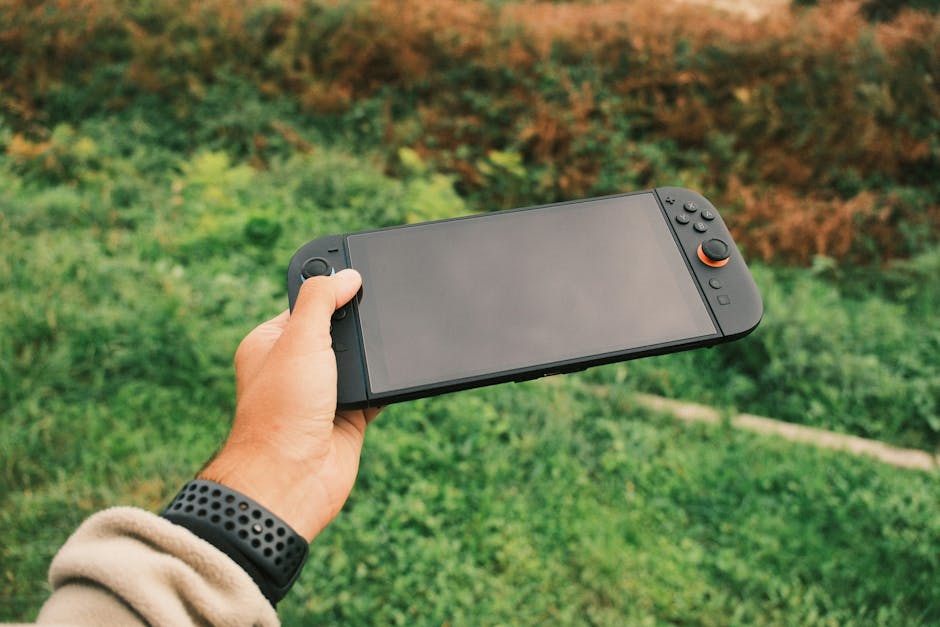
## Processing Power That Finally Matches Modern Games
The biggest complaint about the original Switch? Performance that belongs in 2015, not 2024. The Switch Pro 2 addresses this head-on with leaked specifications that put it in PlayStation 5 territory.
### Custom NVIDIA Tegra Orin Architecture
Sources familiar with Nintendo’s hardware roadmap claim the Switch Pro 2 runs on a custom NVIDIA Tegra Orin chip—the same architecture powering Tesla’s Full Self-Driving computers. This isn’t the aging Maxwell GPU from 2017; it’s NVIDIA’s latest efficiency-focused design.
Expected specifications include 8 CPU cores running at 2.4GHz and a GPU with 1024 CUDA cores. That translates to roughly 2.5 TFLOPS of computing power—triple the original Switch and matching the Steam Deck’s AMD APU performance. More importantly, DLSS 3.0 support could push effective performance even higher through AI upscaling.
### Ray Tracing Comes to Handheld
The Tegra Orin includes dedicated RT cores for hardware-accelerated ray tracing. While this won’t match RTX 4090 performance, it enables lighting effects impossible on current mobile hardware. Expect Nintendo’s first-party titles like the next Mario Kart to showcase reflective surfaces and dynamic lighting that rival PC games.
### Memory and Storage Upgrades
Leaked development kits mention 12GB of LPDDR5X RAM—a massive jump from the Switch’s 4GB. Storage gets equally generous treatment with 256GB of internal UFS 3.1 storage, expandable via microSD cards up to 2TB. Loading times should finally match what players expect from modern gaming hardware.
These specs matter because they solve the Switch’s fundamental problem: developers constantly compromise visual fidelity and frame rates to hit Nintendo’s hardware limits. The Switch Pro 2 gives developers headroom to create games that look and play like their PS5 counterparts.
## Revolutionary Display Technology Changes Everything
Nintendo’s display upgrades go far beyond resolution bumps. Patent applications filed in Japan and the US reveal display technology that could redefine portable gaming expectations.
### Variable Refresh Rate OLED Panel
The Switch Pro 2 reportedly features a 7.5-inch OLED display with variable refresh rate support from 30Hz to 120Hz. This Samsung-supplied panel matches the Steam Deck OLED’s color accuracy while adding smooth motion that the original Switch can’t deliver.
Variable refresh eliminates screen tearing without performance penalties. Games running at 45fps feel smooth instead of stuttery, while 60fps content looks crisp and responsive. For competitive games like Smash Bros or Splatoon, this creates a genuine advantage over standard displays.
### Dual-Screen Mode Returns
Here’s where Nintendo gets creative: the Switch Pro 2 dock includes a secondary 8-inch display panel. When docked, players can use dual-screen setups reminiscent of the DS line—inventory management on the TV, maps on the controller, or asymmetric multiplayer experiences.
This addresses one of the Steam Deck’s biggest weaknesses: dock connectivity. While Valve’s portable connects to TVs, it doesn’t create new gameplay possibilities. Nintendo’s dual-screen approach offers developers unique design opportunities that PC gaming can’t match.
### Haptic Feedback Revolution
Advanced haptic motors throughout the device provide precision feedback that rivals PlayStation 5’s DualSense controller. Leaked developer documentation mentions “surface texture simulation”—players can feel the difference between grass, concrete, and water through controller vibration alone.
Combined with improved Joy-Con designs that address drift issues, the Switch Pro 2’s controls could offer tactile experiences impossible on touchscreen-heavy devices like the Steam Deck.
## Software Ecosystem and Backward Compatibility Advantages
Hardware specs only matter if software takes advantage. Nintendo’s software strategy for 2026 leverages their biggest advantages: exclusive franchises and seamless user experience.
### Enhanced Switch Games Library
Every existing Switch game runs on Switch Pro 2 with automatic enhancements. Leaked development guidelines mention “Pro Mode” patches that unlock higher resolutions, frame rates, and visual effects for popular titles.
Breath of the Wild 2 running at native 4K when docked, or Mario Odyssey hitting 60fps in handheld mode—these improvements come free to existing game owners. The Steam Deck offers similar backward compatibility, but Nintendo’s first-party library remains unmatched.
### Nintendo Switch Online Evolution
Nintendo Switch Online expands dramatically with “NSO Premium” tier. For $12.99 monthly, subscribers get day-one access to select first-party games, cloud saves with cross-device sync, and exclusive game modes that leverage the dual-screen dock setup.
This subscription model directly challenges Xbox Game Pass and could make the Switch Pro 2 more attractive than Steam Deck for casual players who prefer curated content over endless PC game libraries.
### Developer Tool Improvements
Nintendo’s historically poor developer relations get major upgrades. New SDK tools automatically optimize games for both handheld and docked modes, while simplified porting processes help third-party developers bring AAA games to Switch Pro 2 without major compromises.
Leaked communication with major publishers suggests EA, Ubisoft, and Activision are preparing “Switch Pro Enhanced” versions of their biggest franchises for the 2026 launch window.
## The Verdict: A Worthy Steam Deck Challenger
Nintendo’s leaked Switch Pro 2 specifications suggest a device that learns from both the original Switch’s weaknesses and the Steam Deck’s strengths. Raw performance finally matches modern gaming expectations, while Nintendo’s software ecosystem and innovative dual-screen docking create experiences PC gaming can’t replicate.
The key differentiator isn’t just hardware—it’s Nintendo’s approach to user experience. While the Steam Deck requires technical knowledge and patience, the Switch Pro 2 promises the same plug-and-play simplicity that made the original Switch successful.
Success depends on pricing and execution. If Nintendo launches at $449 or below, they could reclaim handheld gaming leadership. At $549 or higher, the Steam Deck’s value proposition becomes harder to ignore.
Either way, 2026 looks like the year handheld gaming truly comes of age. Nintendo’s response to the Steam Deck threat could benefit everyone—players, developers, and the industry as a whole.