

Sony and Microsoft are already deep in development for their next-generation consoles, with insider reports suggesting both the PlayStation 6 and Xbox Series Z could arrive as early as late 2026. While neither company has officially confirmed specifications, leaked documents and industry patents paint a clear picture of what’s coming.
The battle for living room dominance is heating up again. Both consoles are targeting 8K gaming at 60fps, with ray tracing capabilities that could finally deliver the photorealistic visuals we’ve been promised for years. More importantly, both systems are being designed around cloud-hybrid architectures that could fundamentally change how we play games.
Raw Performance: The Spec War Begins
The PlayStation 6 is reportedly built around AMD’s next-generation RDNA 4 architecture, featuring a custom 16-teraflop GPU paired with a Zen 5-based CPU running at 4.2GHz. Sony’s internal documents, leaked through the recent ransomware attack, suggest 32GB of GDDR7 RAM with 1TB of PCIe 5.0 SSD storage as standard.
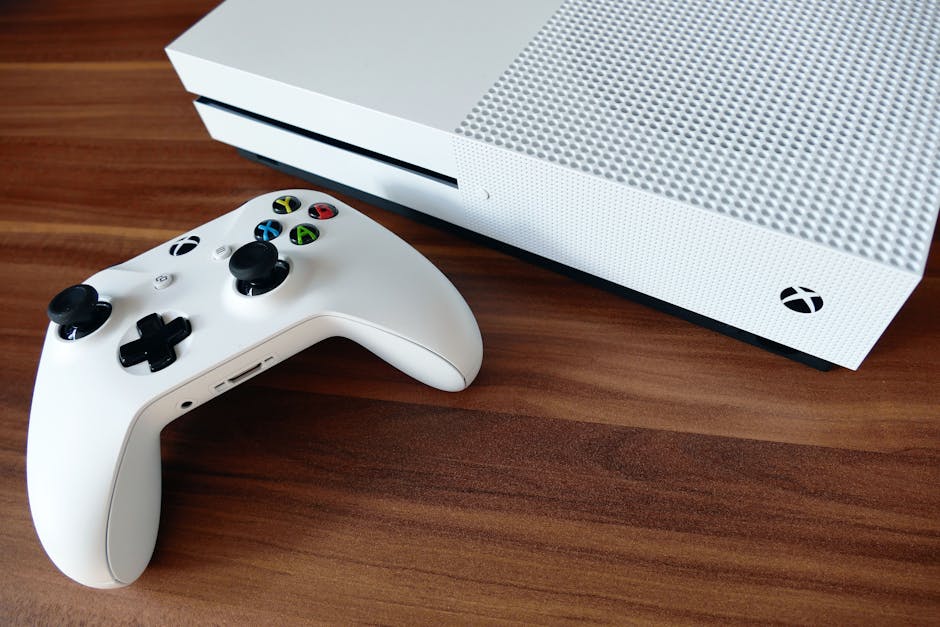
Microsoft’s Xbox Series Z takes a different approach. Rather than chasing raw teraflops, Microsoft is focusing on machine learning acceleration with dedicated ML chips that can upscale 4K content to 8K in real-time. The system allegedly features a 14-teraflop RDNA 4 GPU, but with specialized tensor cores that could deliver equivalent performance to Sony’s higher-spec machine.
Storage represents the biggest generational leap. Both consoles will feature DirectStorage 2.0 technology, allowing games to load assets directly into VRAM without CPU involvement. This means loading times could disappear entirely – imagine fast-traveling in Cyberpunk 2077 and arriving instantly, or switching between multiple games with zero delay.
Memory and Architecture Deep Dive
The PlayStation 6’s unified memory architecture gives developers direct access to all 32GB of GDDR7 RAM, running at 1,000GB/s bandwidth. This eliminates the memory hierarchy issues that plagued early PS5 development, where some games couldn’t fully utilize the SSD’s speed due to RAM bottlenecks.
Xbox Series Z reportedly splits its memory differently: 24GB of GDDR7 for graphics and 8GB of DDR5 for system operations. While this sounds restrictive, Microsoft’s custom memory controller can dynamically allocate resources based on game demands, potentially offering more flexibility than Sony’s approach.
Cloud Integration and Backward Compatibility
Both consoles are designed as cloud-hybrid systems from the ground up. The PlayStation 6 will integrate PlayStation Now directly into the OS, allowing players to stream PS1-PS4 games while downloading PS5 and PS6 titles locally. Sony’s partnership with AWS means cloud saves and game states sync across all devices in under two seconds.
Microsoft’s approach is more aggressive. Xbox Series Z will feature “Smart Delivery 3.0,” which automatically determines whether to run games locally or stream them based on your internet connection and system load. Games like Halo Infinite 2 could run the campaign locally while streaming multiplayer matches from Azure servers to reduce latency and prevent cheating.
The backwards compatibility story heavily favors Xbox. Series Z will play every Xbox game ever made, with AI upscaling for original Xbox and 360 titles. Sony’s PS6 can only guarantee PS4 and PS5 compatibility, though leaked roadmaps suggest they’re working on PS1-PS3 emulation through cloud streaming.
Game Development and Developer Tools
Both companies are courting developers with dramatically improved development kits. PlayStation 6 dev kits reportedly include real-time ray tracing preview tools that let developers see lighting changes instantly, cutting iteration time from hours to minutes. Sony’s also providing AI-assisted texture generation tools that can create 8K assets from 4K sources.
Microsoft’s development approach focuses on cross-platform deployment. Xbox Series Z dev kits can simultaneously test games across PC, Xbox, and mobile platforms, with automatic optimization for each target device. Their new DirectML 2.0 framework allows developers to implement AI features without machine learning expertise.
Release Timeline and Pricing Strategy
Industry analyst Daniel Ahmad predicts both consoles will launch in November 2026, with pre-orders starting at E3 2026. Sony’s targeting a $599 launch price for PS6, with a Digital Edition at $499. Microsoft’s reportedly planning a more aggressive $549 launch price, subsidized by Game Pass subscriptions.
The real differentiator might be launch libraries. Sony’s secured exclusives from Naughty Dog, Santa Monica Studio, and a new first-party studio led by former Rockstar developers. Microsoft’s betting on day-one Game Pass access to major third-party titles, including reportedly securing Call of Duty exclusivity for the first six months post-launch.
Supply chain sources suggest both companies learned from PS5 and Series X shortages. Sony’s partnering with three different chip manufacturers to avoid bottlenecks, while Microsoft’s designing Series Z with alternative component configurations that maintain performance while using different suppliers.
Which Console Will Dominate 2026?
The PlayStation 6 appears to have a raw performance advantage, but Xbox Series Z’s cloud integration and AI acceleration could prove more important in real-world gaming scenarios. Sony’s strength remains in exclusive content, while Microsoft’s value proposition through Game Pass continues to attract budget-conscious gamers.
For hardcore gamers prioritizing cutting-edge visuals, PlayStation 6’s extra GPU power and unified memory will likely deliver the best experience. For players wanting maximum game variety and cloud flexibility, Xbox Series Z’s hybrid approach offers more compelling long-term value.
Both consoles represent genuine generational leaps beyond current systems, but the winner will ultimately be determined by software libraries and online services rather than hardware specifications. Smart money suggests waiting for hands-on comparisons before making a decision.