

The $800 gaming PC sweet spot has never been more achievable. AMD’s Ryzen 5 7600 and Intel’s Core i5-13400F have driven down prices while delivering performance that was considered high-end just three years ago. Meanwhile, graphics cards like the RTX 4060 and RX 7600 XT provide solid 1080p gaming at frame rates that satisfy competitive players and casual gamers alike.
Building a budget gaming PC in 2026 means making smart compromises without sacrificing the core gaming experience. You won’t get 4K ultra settings, but you’ll run modern games at high settings with smooth frame rates. The key lies in understanding which components matter most for gaming performance and where you can save money without feeling the impact during gameplay.
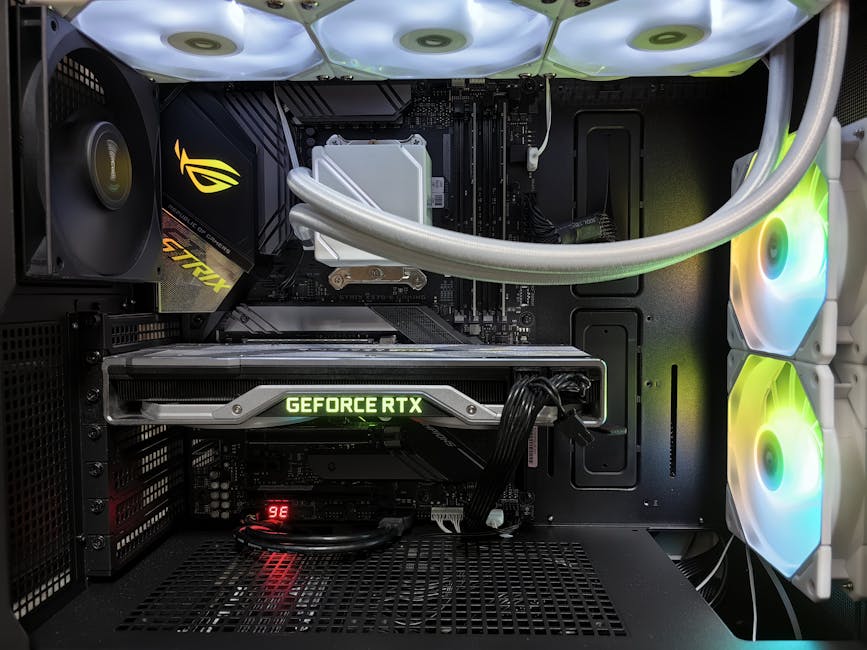
Entry-Level Gaming Build: $650-700
Core Components Breakdown
The foundation of any budget build starts with the CPU-GPU pairing. For this price range, the AMD Ryzen 5 5600 ($130) paired with an RTX 4060 ($280) delivers excellent 1080p performance. This combination handles Cyberpunk 2077 at medium-high settings with 60+ FPS and crushes competitive titles like Valorant and CS2 at 144+ FPS.
For the motherboard, the MSI B450M Pro-VDH Max ($65) provides everything you need without unnecessary features. It supports overclocking, has four RAM slots, and includes built-in Wi-Fi on newer revisions. Pair this with 16GB of DDR4-3200 memory from Corsair Vengeance LPX ($55) – the sweet spot for price-to-performance in 2026.
Storage gets straightforward treatment with a 1TB NVMe SSD like the Kingston NV2 ($60). While not the fastest drive available, it loads games significantly faster than traditional hard drives and provides ample space for your library. Skip mechanical drives entirely in 2026 unless you need massive storage for content creation.
Power and Cooling Solutions
The EVGA BR 500W 80+ Bronze PSU ($45) handles this build’s modest power requirements with room to spare. The entire system draws roughly 350W under gaming loads, leaving adequate headroom for stability. For cooling, the stock AMD Wraith Stealth cooler included with the Ryzen 5 5600 keeps temperatures reasonable during gaming sessions.
Case selection impacts both aesthetics and airflow. The Cooler Master MasterBox Q300L ($40) offers a compact microATX form factor with decent ventilation. Add one 120mm intake fan ($10) to complement the included exhaust fan for optimal temperatures.
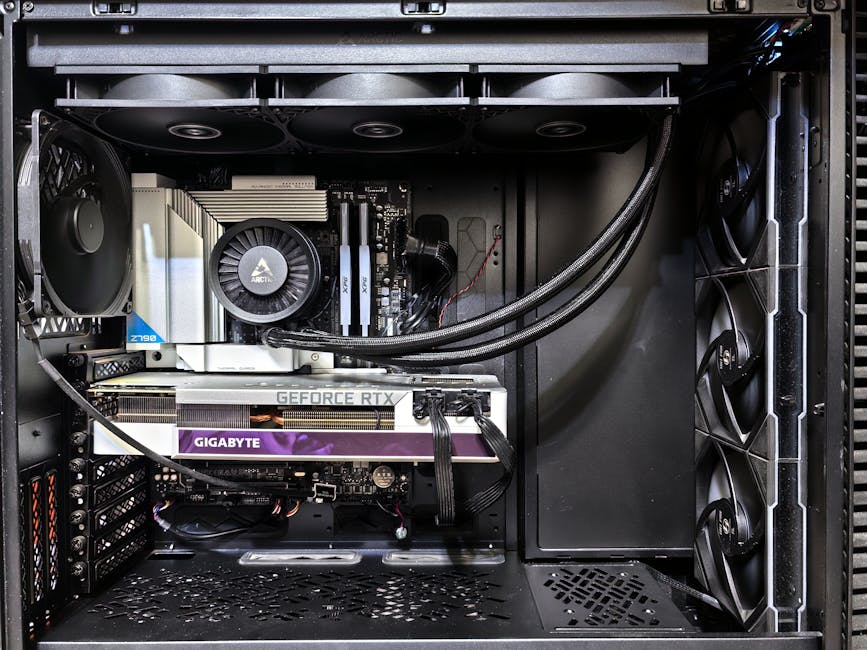
Mid-Range Gaming Build: $750-800
Performance Upgrades That Matter
Stepping up to $800 unlocks meaningful improvements. The Ryzen 5 7600 ($200) on the AM5 platform provides better performance and a clear upgrade path to future CPUs. Pair it with the ASRock B650M Pro RS ($90) motherboard, which supports DDR5 memory and PCIe 5.0 for long-term relevance.
The graphics card upgrade to an RX 7600 XT ($320) delivers approximately 15% better performance than the RTX 4060. This translates to higher settings in demanding games or smoother frame rates in competitive titles. The extra VRAM (16GB vs 8GB) provides better future-proofing for upcoming games with higher texture quality.
DDR5-5600 memory becomes feasible at this price point. G.Skill Flare X5 16GB kit ($85) offers substantial performance improvements in CPU-limited scenarios and future-proofs your system for upcoming games that better utilize faster memory.
Storage and Connectivity Enhancements
Upgrade storage to the Crucial P3 Plus 1TB ($70), which provides significantly faster loading times and better overall system responsiveness. The performance difference becomes noticeable when launching games, transferring files, or running multiple applications simultaneously.
Power requirements increase slightly, necessitating the Corsair CV650 80+ Bronze PSU ($65). This unit offers better build quality, modular cables for improved airflow, and sufficient wattage for future GPU upgrades.
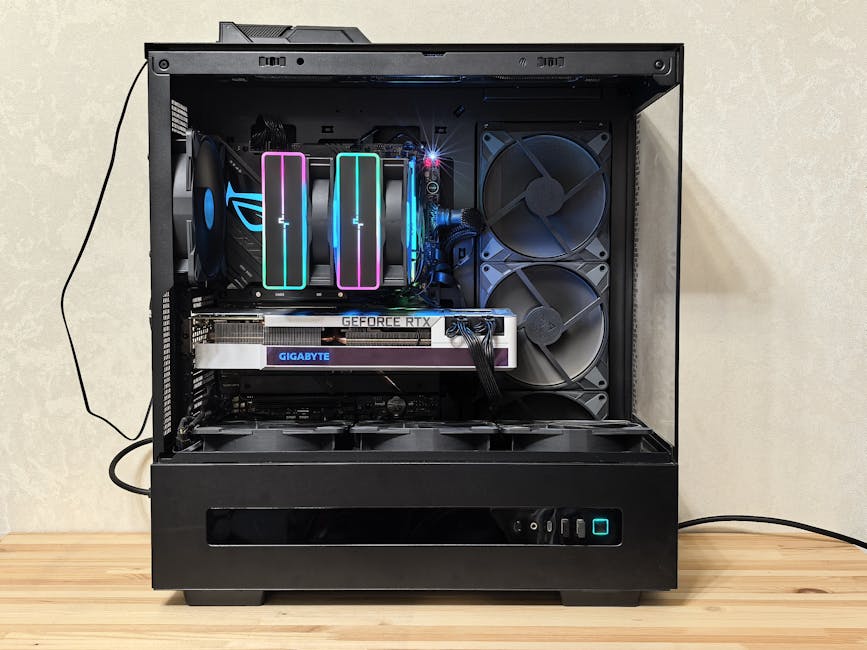
Optimization Strategies and Money-Saving Tips
Component Prioritization
Understanding the performance hierarchy prevents costly mistakes. Your GPU contributes 60-70% of gaming performance, making it the most important component. CPU performance matters for competitive gaming and streaming but shows diminishing returns beyond mid-range options for pure gaming.
RAM speed impacts performance more significantly with AMD CPUs, particularly on the AM5 platform. Intel systems show smaller gains from faster memory, making DDR4-3200 perfectly adequate for budget Intel builds.
Storage speed affects quality of life more than gaming performance. A slower SSD still provides dramatically better loading times than mechanical drives, making expensive high-end SSDs unnecessary for gaming-focused builds.
Strategic Component Selection
Buy GPUs from EVGA, MSI, or ASUS for better cooling solutions and customer support. Avoid single-fan graphics cards – they run hotter and louder than dual-fan alternatives while costing nearly the same.
Motherboard features like Wi-Fi, multiple GPU slots, and excessive RGB lighting add cost without gaming benefits. Focus on boards with good VRM cooling, adequate expansion slots, and proven reliability.
Power supply efficiency ratings (80+ Bronze, Gold, etc.) matter less than build quality and warranty coverage. A quality 80+ Bronze unit outperforms a poor 80+ Gold PSU while costing significantly less.
Performance Expectations and Upgrade Path
These builds handle current games excellently at 1080p resolution. Expect high settings in most titles with frame rates between 60-100 FPS. Competitive games like Valorant, League of Legends, and CS2 easily exceed 144 FPS, making high refresh rate monitors worthwhile investments.
Future upgrade priorities start with the graphics card after 2-3 years. Both builds support GPU upgrades without CPU bottlenecking, extending their useful life considerably. The AM5 platform in the $800 build provides CPU upgrade options through 2027, while the AM4 platform offers limited but adequate upgrade potential.
These configurations deliver genuine gaming performance without compromise on the essentials. You’re getting smooth frame rates, fast loading times, and room for future improvements – everything needed for an excellent gaming experience under $800. Choose based on your budget constraints, but either build provides years of solid gaming performance.