Ray Tracing at 1080p: A Practical Fight Between AMD and Nvidia
Ray tracing has long been Nvidia’s home turf. The RTX architecture was built around it, marketed around it, and for years that reputation held up under scrutiny. But AMD’s RDNA 4 architecture, powering the Radeon RX 9070, is a direct challenge to that assumption – and at 1080p, where ray tracing overhead can actually be managed by mid-range hardware, the gap between these two cards is far narrower than Nvidia’s marketing would have you believe.
The RTX 5060 Ti arrives with Blackwell architecture, DLSS 4 with Multi Frame Generation, and Nvidia’s mature ray tracing pipeline. The RX 9070 counters with RDNA 4’s substantially improved ray accelerators and FSR 4 with its new machine learning upscaling. Both cards target the mainstream performance bracket, and both are priced to compete directly. What happens when you run them through a focused ray tracing workload at 1080p tells a story neither company would write themselves.
Hardware, Architecture, and What Actually Matters for Ray Tracing
The RX 9070 is built on TSMC’s 4nm process and carries 16GB of GDDR6 memory across a 256-bit bus. AMD doubled the ray accelerators per compute unit in RDNA 4 compared to RDNA 3, which is not a small engineering footnote – it’s the foundational reason the 9070 can even compete here. The card also benefits from a redesigned BVH traversal pipeline, which determines how efficiently the GPU processes the complex geometry intersections that ray tracing demands.
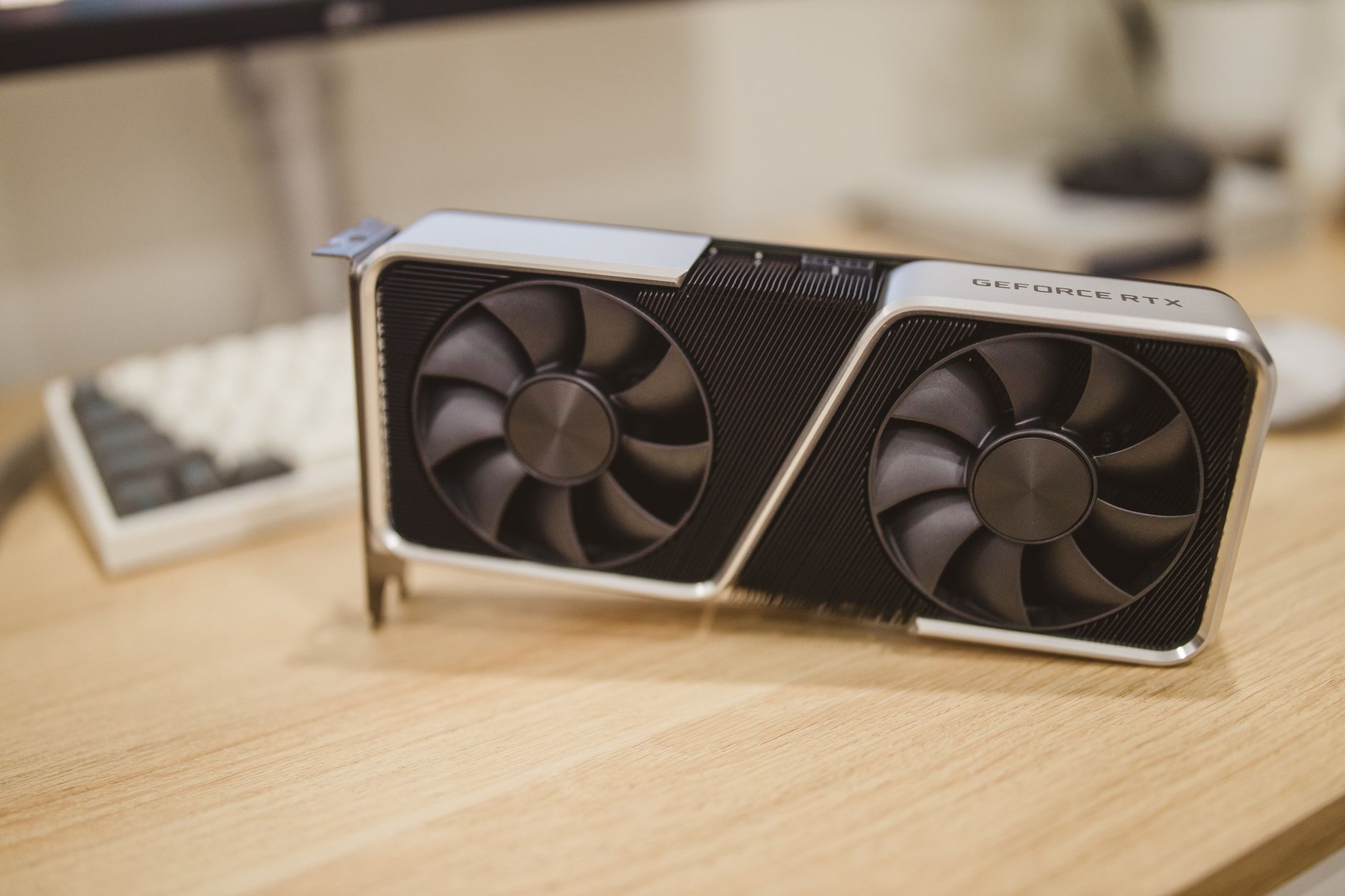
The RTX 5060 Ti, also built on a 4nm process, packs Nvidia’s fifth-generation RT cores alongside Tensor cores optimized for AI-driven workloads. It ships in 8GB and 16GB configurations, and that VRAM split matters more than it might look on a spec sheet. At 1080p with aggressive ray tracing enabled, some titles push buffer usage past 8GB, making the 16GB 5060 Ti the relevant comparison point for this test. Nvidia’s RT cores handle ray-box and ray-triangle intersection tests in dedicated silicon, a design approach the company has refined across multiple generations.
Where the architectures genuinely diverge is in how they handle denoising and upscaling as companions to ray tracing. Nvidia’s approach leans heavily on DLSS 4, which uses AI-based reconstruction to recover performance lost to ray tracing overhead. AMD’s FSR 4, now using a neural model rather than the spatial algorithm of earlier versions, closes that gap significantly – but FSR 4 requires RDNA 4 hardware, while DLSS 4 runs on a broader installed base of RTX cards. At 1080p specifically, both technologies have room to work comfortably without aggressive quality trade-offs.
Upscaling and Its Role in the Numbers
Testing ray tracing without factoring in upscaling gives you an incomplete picture in 2025. No mainstream GPU runs demanding ray tracing workloads at native resolution with optimal frame rates – both AMD and Nvidia design their mid-range cards with the assumption that upscaling will be part of the pipeline. At 1080p, DLSS 4 Quality mode targets 720p internally and reconstructs up, while FSR 4 Quality mode operates similarly. The output quality from both is strong enough at 1080p that distinguishing them on a typical monitor requires deliberate pixel-peeping rather than normal play.
Where Nvidia pulls ahead is Multi Frame Generation. The 5060 Ti can use MFG to multiply frame output in supported titles, which inflates performance numbers significantly. This is worth being clear about: MFG-generated frames carry input latency implications, and the technology works best when base frame rates are already healthy. At 1080p with ray tracing, the 5060 Ti with MFG active can post numbers that look dominant on a benchmark chart, but the actual feel of the experience – especially in fast-paced games – depends on whether you prioritize raw throughput or response time. AMD has no direct equivalent to MFG currently, and that’s a genuine advantage for Nvidia in specific scenarios.
Game-by-Game Performance: Where Each Card Wins
In Cyberpunk 2077 with RT Overdrive enabled at 1080p, the RTX 5060 Ti holds a clear lead at native resolution. Path tracing is extraordinarily demanding, and Nvidia’s RT core maturity shows. With DLSS 4 Quality active, the 5060 Ti runs comfortably above 60fps in most city areas, while the RX 9070 with FSR 4 Quality trails by roughly 15 to 20 percent in GPU-limited scenarios. This is the worst-case gap for AMD, and it’s the title Nvidia would choose to headline any comparison.
Alan Wake 2 tells a different story. The game uses ray tracing extensively but is less reliant on the kind of brute-force RT throughput that Cyberpunk demands. Here, the RX 9070 with FSR 4 Quality mode closes to within single-digit percentage differences against the 5060 Ti, and in some outdoor sequences actually trades blows evenly. AMD’s improved denoising and the efficiency of RDNA 4’s BVH traversal are directly visible in this result. Control produces a similar pattern – the gap narrows considerably in titles that use ray tracing for specific effects like reflections and shadows rather than full path tracing.
Indiana Jones and the Great Circle, built on id Tech 8 and using ray tracing as a core rendering feature, puts both cards in an interesting position at 1080p. The game is well-optimized, and at 1080p with ray tracing set to High, both cards exceed 60fps with upscaling active. The 5060 Ti averages slightly higher, but the margin is small enough that most players would not notice during play. This is where AMD’s value proposition becomes most coherent – you’re getting 85 to 90 percent of the ray tracing experience at a lower price point, in titles that weren’t designed to specifically showcase Nvidia hardware.
Spider-Man: Miles Morales on PC reinforces that pattern. With ray tracing reflections and ambient occlusion enabled, the RX 9070 keeps frame rates competitive throughout, and the visual output with FSR 4 active is genuinely difficult to distinguish from DLSS 4 at 1080p output. The gap that exists in extreme path-traced scenarios effectively disappears in a title like this, which represents a much larger portion of the ray-traced game library than Cyberpunk’s outlier workload does.
The RTX 5060 Ti wins the ray tracing benchmark when the methodology favors peak throughput, path tracing specifically, and Multi Frame Generation is counted in performance totals. The RX 9070 wins the value argument in most of the games people actually play with ray tracing enabled – where RDNA 4’s improved RT pipeline closes the gap to the point where price becomes the deciding factor. At 1080p, the 9070’s 16GB of VRAM also gives it more headroom than the base 8GB 5060 Ti configuration in titles that push memory aggressively. If you’re choosing between these two cards specifically for ray tracing at 1080p, the honest answer is that Cyberpunk 2077 at RT Overdrive is about the only scenario where the Nvidia advantage is large enough to justify the price premium on its own.